CHASING THE REAL: ITALIAN NEOREALISM | London, BFI Southbank

Recommended

The new season at London’s BFI Southbank is on Italian Neorealism, including some rarely screened films. This two-month season features the different formal approaches taken by seven directors who made reality into a spectacle. The season includes twenty titles, from rarely shown gems to seminal works.

Highlights include Rome, Open City (1945), Four Steps in the Clouds (1942), and Shoeshine (1946), where season curator Giulia Saccogna will be giving introductions to the screenings. Christina Newland and academics Professor Richard Dyer and Professor Stephen Gundle will join Saccogna for “Journey Through Italian Neorealism”, offering new perspectives on this influential movement in cinema history.

BFI members can also join a six-session course exploring the portrayal of reality in Italian neorealist film, entitled “City Lit at the BFI: Italian Neorealism – The Cinema of Everyday Life”.

This decisive decade is ripe for rediscovery; it’s been 80 years since Rossellini started work on Rome, Open City (1945) and 70 years since the ‘official’ end of the movement, yet it remains relevant to our current times in its ability to teach us the importance of freedom and to reinforce our capacity for compassion.

LISTINGS:

Rome, Open City (1945)
A foundational Italian neorealist film and a dramatic portrait of a city under occupation.

Four Steps in the Clouds (1942)
A rural interlude for a city employee turns into an idyllic interruption to the monotony of his life, in one of the first films to display neorealist traits.

The Children Are Watching Us (1944)
Family, betrayal and alienation: a masterpiece ahead of its time.

Ossessione (1943)
Emerging from the tumultuous climate of Italy in 1943, Luchino Visconti’s sensational debut wipes out years of fascist rhetoric with its bitter, transgressive realism and radical sexuality.

Paisà (1946)
The second part of Rossellini’s revered war trilogy is a key milestone of Italian neorealism which reveals a truthful simplicity in six searing tales.

Germany, Year Zero (1948)
The final part of Rossellini’s war trilogy divided audiences at the time, while Chaplin called it “the most beautiful Italian film” he’d ever seen.

Shoeshine (1946)
Distinctly compassionate and humane, De Sica’s foundational neorealist drama was the first ever winner of the Oscar for Best Foreign Language Film.

A Tragic Hunt (aka The Tragic Pursuit) (1947)
A little-seen gem, set in the chaos of post-war Italy, by one of the crucial voices in the development of neorealism.

The Bandit (1946)
The trauma of the Second World War is explored in one of the treasures of Italian cinema.

Bicycle Thieves (1948)
The Oscar-winning drama that represents post-war Italy more vividly than any other.

La terra trema (1948)
Visconti’s social conscience, impacted by war, prompted this strikingly beautiful portrayal of the unjust humiliation of workers in southern Italy.

The Mill on the Po (1949)
Alberto Lattuada achieves a starkly poetic grandness with this variation on the themes of neorealism, set during the historic revolts in the Po Valley.

Bitter Rice (1949)
Nominated for an Academy Award and harshly condemned by the church, this drama attracted international acclaim and success, rightfully earning its place in the history of neorealist cinema.

Book for all events across May and June 2024 on the BFI website.

The Prickle - About transp

INTERVIEW: MARK WARTENBERG | Berlin, Germany

Interview

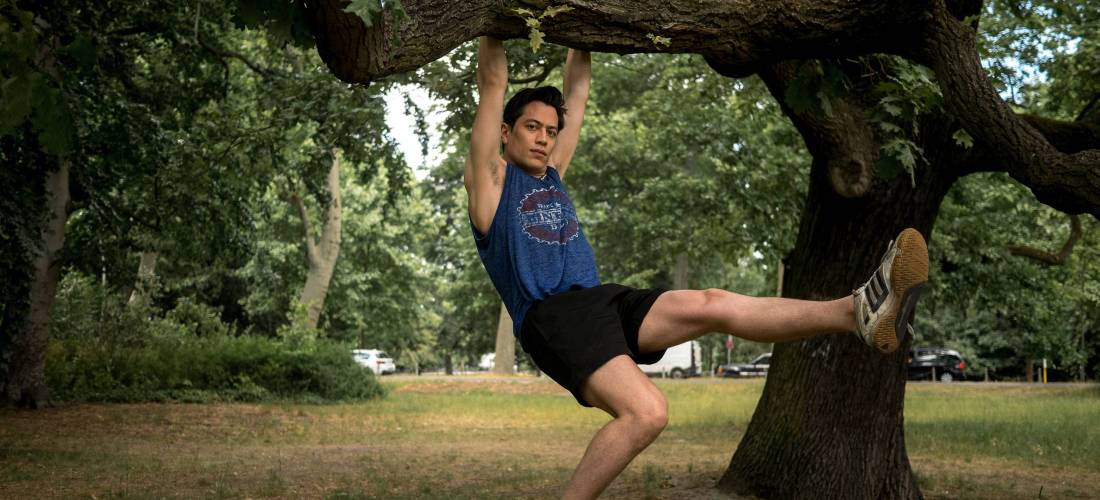
Berlin-based actor Mark Wartenberg is in the throes of a new challenge: recording a sonnet a day, and posting each video onto Instagram.  He explains his fascination with Shakespeare, and how he got the idea in the first place.

– How did you come up with this idea of doing a Shakespeare sonnet a day?

I think that doing a sonnet a day is quite a unique way of conveying the liveliness, nuances, inventiveness, and paradoxes of Shakespeare’s style. For instance, I imagine he dashed some lines off while obsessing over others. And I think that the daily attempt to perform each sonnet under limited preparation time also conveys what I imagine was Shakespeare’s interest in taking risks poetically.

– And you do every sonnet differently.

I try to mix things up a bit: different locations; different acting styles; different camera angles; depending on how I feel, and the energy of the sonnet. Sometimes the sonnets are sung, sometimes they are performed in an accent, et cetera.

– We have 154 published Shakespeare sonnets: isn’t it quite a challenge to knock a new one off every single day?

Each of my performances is necessarily imperfect. I mean, there might be a lack of diction; or I might forget or flub lines; there might be hazy intention and meaning; et cetera. But I believe that all hundred and fifty-four performances together will create a powerful work.

– You’re also not British.

My English is native-level, and sounds American, but I’m actually French-German-Indonesian.  But I think the fact that I’m not British adds an interesting dimension: Shakespeare didn’t talk in RP [received pronunciation], so departing from that might bring him closer to us.

– What fascinates you about Shakespeare, and particularly his sonnets?

It’s the imaginative breadth, depth and playfulness. How he seems to love contradictions and nuances, and yet his sonnets are very dramatic. They’re also, often, very silly. Shakespeare has such a bold way of creating images, breaking rules, and still following through on logic. And I love the cadence of his poetry: it creates these amazing variations in thought and emotion.

– What about Shakespeare the man? Are you equally fascinated by the historical Shakespeare?

Notoriously little is known about Shakespeare, which is perhaps why I find him so fascinating. He was living in a world so different from ours – Renaissance England – but he wrote verse that is incredibly vivid, still to this day.

Follow Mark Wartenberg on Instagram for recordings of all 154 of Shakespeare’s sonnets.

The Prickle - About transp

INTERVIEW: MICHAEL DUKE (Get Up, Stand Up! The Bob Marley Musical)

Interview

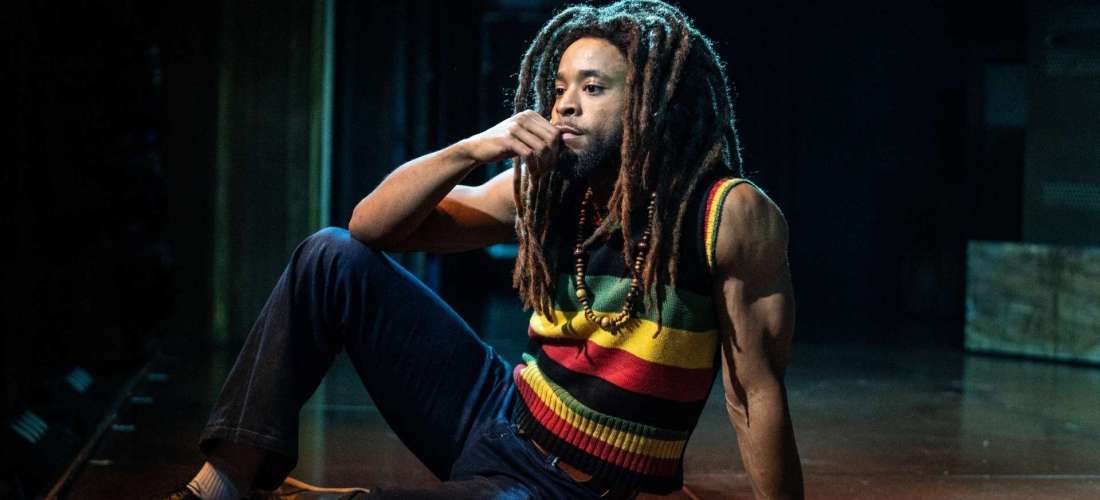
London-based actor and singer Michael Duke answers our questions about playing Bob Marley in the Olivier Award-winning musical Get Up, Stand Up! at the Lyric Theatre in London’s West End.

– You are playing Bob Marley… how does it feel to be stepping out on stage and playing this role, live on stage, to a London audience?

It feels great. I think that there’s something quite specific about it being a London audience. I mean, in this country, anyway, there’s a massive Caribbean culture, and it feels – I feel a great honour to be able to represent it. A lot of people who come to see the show, as well, yes, they know Bob Marley’s music, but not necessarily the culture and history and everything surrounding it, so again, for me it’s an honour to tell these stories and educate people, as well. It’s great.

– How do audiences for Get Up, Stand Up! compare to other audiences you’ve performed to?

Completely different. In our theatre the sound is incredibly loud, which you’re not going to get in many theatre productions. There’s a lot of bass, and the audience seem to engage with the piece a lot more vocally, which I think can be great, to an extent, because it’s very Caribbean, and I love that.

– Bob Marley died in 1981, over forty years ago now. Why this story, and why now?

I think this story could have been told ten years ago, and it could be told in ten years time, because I don’t think that the story or the culture has been celebrated nearly enough as it should be. For an audience nowadays, what we read in the news and what we see at the moment reflects a lot of the things that happened back then. As long as these themes and these issues still exist, the show will always be relevant.

– Some people seem to have some kind of snobbery about so-called “jukebox” musicals. What’s your take?

When the story is great, I love them. Because I think for a show like ours, you could take away the songs and it would still be a great story. But then you add the songs back in and it becomes even better.

– Has anything surprised you about performing this role? And do audiences come away surprised by anything?

People only really know Bob Marley’s music, and his individuality is possibly overshadowed by the Rastafarian image. But, like everyone else, he was a person, and so in Get Up, Stand Up!, you get a sense of his human nature.

Playing at the Lyric Theatre until 8 January 2023.

The Prickle - About transp